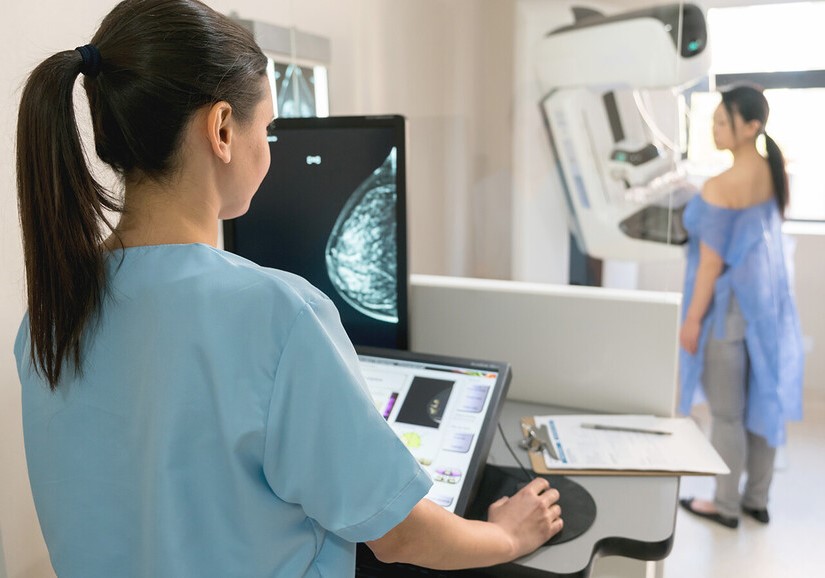
What is Mammography?
Mammography is a specialized, low-dose X-ray imaging technique used to detect breast cancer and abnormalities, often finding tumors before they are palpable. It is essential for early detection, with 2D or 3D (tomosynthesis) images identifying microcalcifications, masses, and distortions. Key applications include routine screening (asymptomatic) and diagnostic exams for symptoms like lumps.
Key Details About Mammography:
- Purpose: The primary goal is the early detection of breast cancer to reduce mortality rates.
- Procedure: A technologist places the breast between two plates, compressing it for a few seconds to flatten tissue for a clearer, detailed image.
- Technology: Uses low-dose ionizing radiation; 3D mammography (tomosynthesis) is becoming more common, often replacing 2D in many facilities.
- Limitations & Risks: Potential for false positives (leading to unnecessary anxiety or further testing) and, rarely, false negatives.
Preparation and Considerations:
- Avoid using deodorant, antiperspirant, powder, or lotion on the day of the exam, as these can appear as spots on the X-ray.
- It is best to schedule the exam one week after a menstrual period to minimize discomfort.
- Compact Size: More suitable for dental offices.
- Previous mammograms should be available for comparison.
Types of Mammography
- Screening Mammography: Done on asymptomatic women, typically annually or biennially starting around age 40–50, to detect early, hidden signs of cancer.
- Diagnostic Mammography: Performed to investigate specific symptoms (e.g., pain, lumps, nipple discharge) or to follow up on abnormal screening results.